


![Jarvis Dining Chairs [Set of 2] [Faux Leather]](http://ofcasafurniture.com/cdn/shop/files/20260729154846.jpg?v=1785311411&width=104)
![Aoife Sleek Dining Chairs [Set of 2] [Linen Texture Fabric]](http://ofcasafurniture.com/cdn/shop/files/UDC8025_2.jpg?v=1777366607&width=104)
![Zahra Dining Chairs [Set of 2] [Boucle Fabric][⌀ 1.9 cm]](http://ofcasafurniture.com/cdn/shop/files/51_c6c2d8af-ba92-4c46-a677-4fe5804efb23.jpg?v=1789623459&width=104)

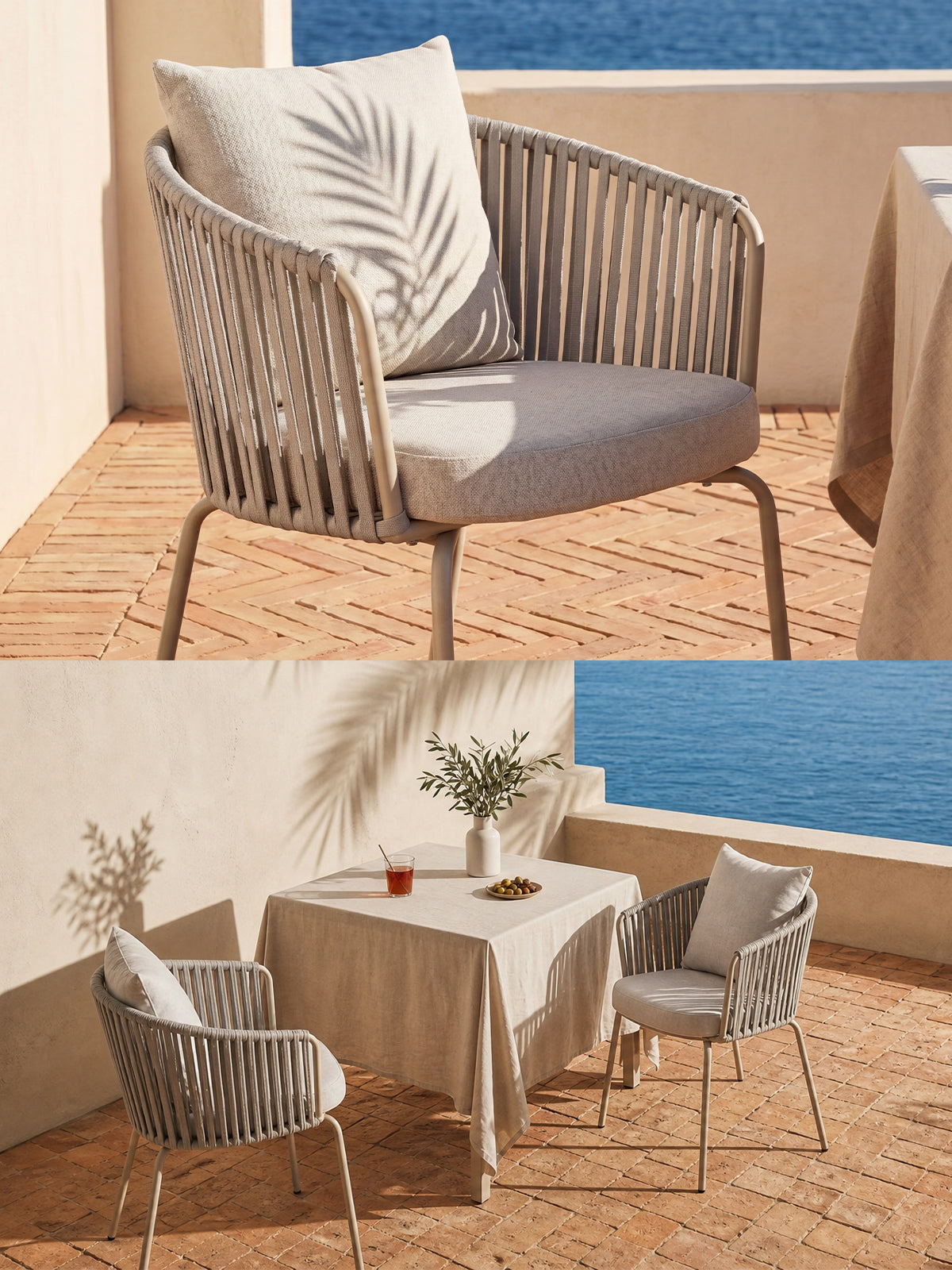
There’s a particular shift that happens when summer arrives; not just outside, but inside too. Something in us wants to lighten up. Move the heavy throws to the top shelf. Open the windows wider. Create a little more space between things. It’s not about a complete overhaul; it’s more like the home itself exhales, and you’re just helping it along.
Summer interiors are less about dramatic transformations and more about the gentle accumulation of the right details. A softer texture here. A round edge where there used to be a sharp one. A chair that sits low and easy. When those things come together well, the whole room shifts in feeling, it becomes somewhere you want to sit in the afternoon, linger over a meal, and has people over without thinking too hard about it.
That ease is really what this season’s style is about. Not a look so much as a feeling. And the good news is, it’s quite achievable, even without starting from scratch.
What is Breezy Summer Style?
Summer-inspired interiors have a few things in common, but they do not rely on literal beach imagery or decorative motifs. Instead, the defining features of this style are more subtle, natural, and timeless, which is also what makes them more enduring.
Light, lifted color palettes
The colors that define summer interiors generally fall within a soft, low-saturation, and nature-inspired spectrum. Tones such as cream, linen beige, sage green, night turquoise.
These colors work particularly well in summer interiors because:
-
- They belong to a low-saturation, nature-inspired palette, which feels softer and more calming
- They help reflect natural light, making spaces feel brighter and more open
- They reduce visual weight and support a relaxed, airy atmosphere
Their shared visual effect is a sense of calmness, lightness, and natural cohesion within a space.
Cream, compared to stark white, works beautifully for summer spaces. It maintains a light, airy brightness while carrying gentle muted warmth, softening the room and eliminating the stark, harsh glare of pure white.
Linen beige, as a foundational neutral tone, plays a stabilizing role by connecting different materials and colors, keeping the space cohesive, calm, and visually balanced.
Sage green carries a muted, plant-like grey-green tone, introducing a gentle sense of nature and the outdoors without overwhelming the space, which makes it especially compatible with materials such as wood and linen.
Night Turquoise leans richly toward deep emerald green with faint cool blue undertones, delivering a soothing cool depth without feeling stark or icy. It elevates the airy, refreshing tranquil vibe of summer interiors.
 Natural textures and honest materials
Natural textures and honest materials are equally important to color in summer interiors. Compared with visual lightness, materials determine the real tactile experience and the overall sense of comfort. A breezy summer style is achieved not only through soft color palettes, but also through materials that help reduce the sense of heaviness in a space, making the environment feel cooler, lighter, and more breathable.
1. Linen
Linen is one of the foundational materials in summer interiors. Its defining quality lies in its natural, relaxed texture, which helps soften the overall atmosphere of a space.
- Its slightly irregular fiber structure brings a natural, organic character to interior
- It has excellent breathability, helping the space feel more comfortable during hot seasons
- It pairs well with both wood and metal, softening hard surfaces while maintaining structural clarity

2. Light Leather
Light-colored leather helps balance both texture and tactile comfort in summer interiors. Rather than feeling heavy or visually dense, it introduces a subtle cooling impression through its surface quality. Especially in light tones, matte finishes, or fine-grain textures, leather works well in summer spaces both visually and tactilely.
- Light-colored leather has a refined surface texture that does not create visual heaviness or pressure in a space.
- At the same time, its material quality enhances a sense of freshness and subtle cooling, making it particularly suitable for summer interiors.
 3.Rattan
Rattan is a material that combines structure with visual lightness. It maintains form while still feeling airy and unobtrusive, allowing furniture to exist within a space without overwhelming it.
- The woven structure naturally creates gaps, making the visual weight lighter
- It introduces a handcrafted and organic quality to interiors
- It is commonly used in seating, storage, and decorative furniture elements
 Together, these materials help create a space that feels more natural, breathable, and visually balanced.
How to Create a Breezy Summer Home?
Summer spaces breathe. There’s not a lot going on visually, fewer accessories on surfaces, more floors visible, furniture arranged with a bit more space between pieces. This isn’t minimalism for its own sake; it’s more about letting the room feel unhurried. Like there’s no rush, and there doesn’t need to be.
Practical Ways to Create a Breezy Summer Home
-
-
Edit before you add.
The single most effective thing you can do for a summer interior is remove things rather than acquire new ones. Pack away the heavier textiles, clear surfaces. Create space. Let the room breathe before you introduce anything new. -
Introduce lighter textiles deliberately.
Swap out heavier curtains for sheer linen panels if you can. Bring in lighter-weight cushion covers. Put the sheepskin rug in storage and leave the floorboards bare or swap it for something flatter and more loosely woven. -
Layer textures, not colors.
In summer interiors, the interest tends to come from texture rather than color contrast. A room in three tones, linen, sage, and oak, say, stays coherent and calm while still feeling designed. Add a woven basket, a ceramic vase, a loose-weave throw. The variation in surface keeps things interesting without visual noise. -
Use plants intentionally.
Not a shelf covered in five small pots. One or two significant plants, in simple containers that don’t compete with them. A large-leafed plant in a raw clay pot does more for a summer interior than a carefully curated collection of smaller ones. Scale matters here. -
Work with natural light, not against it.
Move furniture away from windows if it’s blocking light. Take down heavy window treatments entirely if the privacy situation allows. Add a mirror or two to bounce light around a room that doesn’t get as much as you’d like. -
Think about furniture flow.
In summer, rooms feel best when they’re easy to move through — nothing blocking a natural path, no furniture crowded together in one corner. Openness is its own form of decoration.
-
Edit before you add.

Besides practical ways to create a breezy summer home, it is also important to understand common summer styling mistakes to avoid.
Common Summer Styling Mistakes to Avoid
Some of these are very easy to fall into. None of them are unrecoverable, but they’re worth naming honestly.
-
-
The themed-room problem
Coastal prints, anchor motifs, everything vaguely beachy, this is the summer styling equivalent of buying a fancy-dress costume instead of a wardrobe. It’s one-note, it dates quickly, and it leaves no room for the more interesting, layered version of the same mood. -
Emptying the room in pursuit of lightness
There’s a version of “breezy” that goes too far and ends up feeling sparse and uninviting. A room needs warmth, in texture, in material, in the suggestion that someone lives there. Removing things is right; removing too many leaves a room that feels more like a waiting room than a home. -
Prioritizing aesthetics over comfort
A chair that looks stunning but sits uncomfortably isn’t a summer chair, it’s a photography prop. The whole appeal of summer interiors is ease, and ease requires being comfortable in the furniture. When in doubt, sit in the thing before deciding. -
Delicate materials in the wrong places
Pale, loose-weave linen in a household with children and dogs, directly under a window that gets full afternoon sun, these are circumstances worth thinking about. Matching the fabric to the location rather than just the aesthetic is the unsexy but important part of good decorating. -
Overdoing the seasonal accessories
Five different botanical prints, three different rattan objects, two driftwood pieces, and a collection of shells: this is how a summer interior stops feeling serene and starts feeling noisy. Choose fewer, better things. The less you have to explain a room, the more confident it is.
-
The themed-room problem
 In summary, creating a refreshing summer space requires a series of conscious adjustments to optimize the overall spatial experience. These include reducing unnecessary items, incorporating lighter materials, enhancing the flow of natural light, and maintaining an open and fluid layout through thoughtful spatial organization.
On the other hand, it is equally important to avoid common design pitfalls such as over-theming, over-minimizing the space in pursuit of “lightness,” neglecting comfort, using unsuitable materials, and overloading the environment with decorative elements. These issues can easily weaken the natural, calm, and relaxing atmosphere that defines a summer-inspired interior.
Therefore, the essence of summer style is not simply about following a set of correct steps or avoiding mistakes, but about finding a careful balance between intentional design choices and restrained execution. When this balance is achieved, the space feels light and breathable, while still retaining warmth, comfort, and a genuine sense of everyday life.

Leave a comment
This site is protected by hCaptcha and the hCaptcha Privacy Policy and Terms of Service apply.