


![Jarvis Dining Chairs [Set of 2] [Faux Leather]](http://ofcasafurniture.com/cdn/shop/files/20260729154846.jpg?v=1785311411&width=104)
![Aoife Sleek Dining Chairs [Set of 2] [Linen Texture Fabric]](http://ofcasafurniture.com/cdn/shop/files/UDC8025_2.jpg?v=1777366607&width=104)
![Zahra Dining Chairs [Set of 2] [Boucle Fabric][⌀ 1.9 cm]](http://ofcasafurniture.com/cdn/shop/files/51_c6c2d8af-ba92-4c46-a677-4fe5804efb23.jpg?v=1789623459&width=104)
Choosing the Right Furniture
This is where people tend to go wrong or right – if they're paying attention. Furniture choices make or break a Japandi room, and the decisions aren't really about price point. They're about material, silhouette, and how a piece lives in space over time.
The dining room is a good place to start, partly because it's where a lot of Japandi decisions collide – seating, surface, light, and gathering. Round dining tables, for example, feel naturally Japandi. There's something about the absence of corners that softens a room; it changes the social geometry too, making conversation feel more equal. A warm-toned wooden dining table with a simple, unpretentious base—without any fussy design—instantly harmonizes the entire room's atmosphere; we recommend Isabeau dining tables.
 A round table in solid wood with a single pedestal base earns its place in a Japandi room because the form does the work – no visual clutter underneath, just a clean, grounded presence.
If you prefer a slightly larger or more rectangular dining table—perhaps the Laila table is a better fit for your room—choose a style with clear wood grain and simple edges. Light-colored natural oak with a matte finish, or a design with subtle stone details, blends Japanese understated elegance with Scandinavian warmth beautifully.
The art of the dining chair
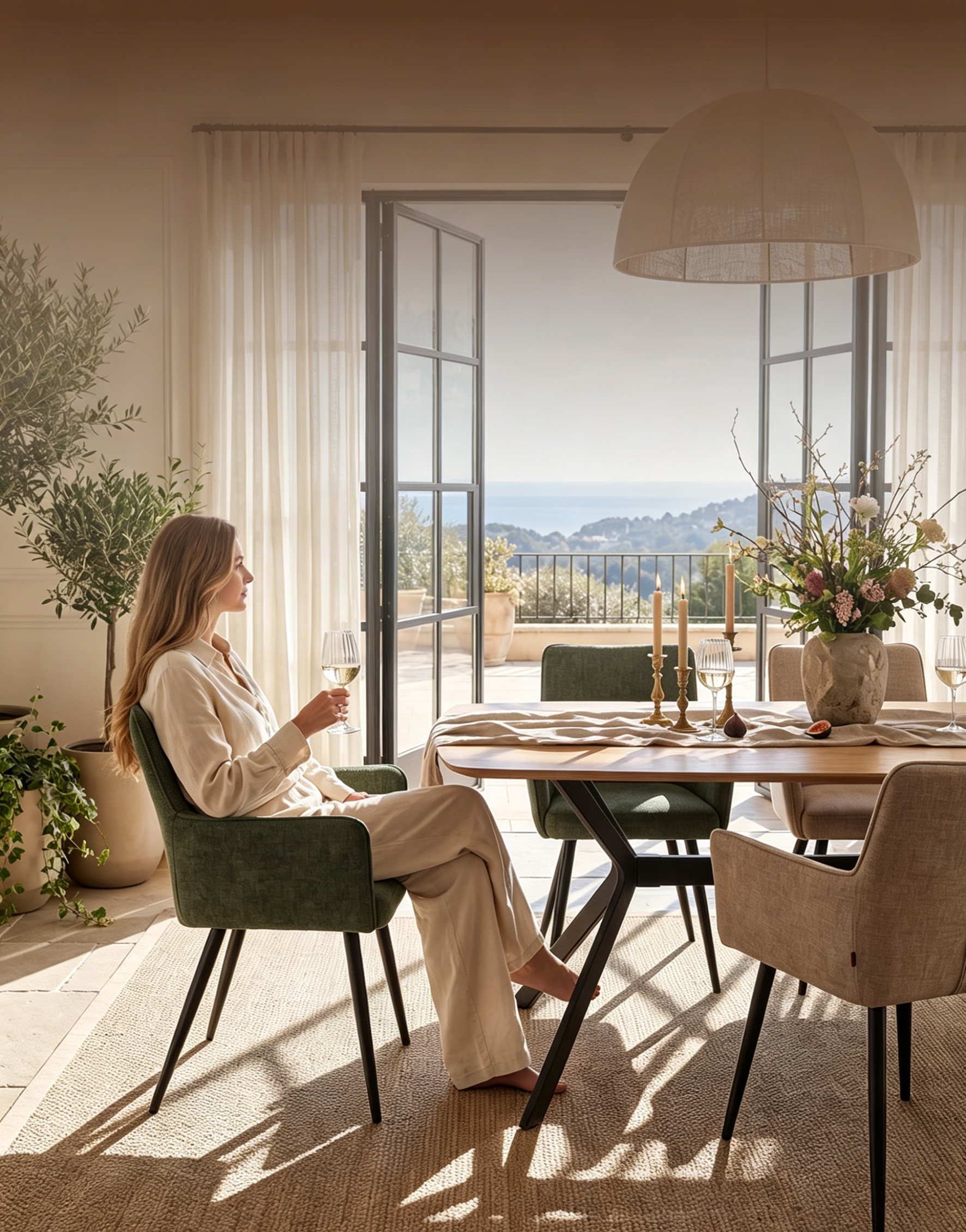
Chairs are where texture really gets to do its thing. Japandi loves bouclé right now – that looped, slightly nubby fabric that catches light beautifully and feels wonderful to the touch. It reads as cozy and crafted at once, which is exactly the register you want. A soft looped plush dining chair—Yasin Dining Chairs—can add the understated elegance favored by Japanese Scandinavian style to a space without needing to deliberately attract attention.

Armchairs in the dining space have become increasingly popular, and it makes sense – they add that Scandinavian dimension of comfort to a room that can sometimes feel too formal. A 360-degree swivel linen armchair also offers great flexibility; for example, our new Elara Swivel Chairs are particularly well-suited for open-plan spaces, allowing the furniture to play a more significant role.
Don't overlook the barstool
Kitchen islands and bar counters have become almost standard features in modern homes, and the choice of bar stools is more important than people realize. In a Japanese-Swiss style space, you need stools that are both visually striking and stylish. Linen-like bar stools are not only comfortable to the touch, but also exquisitely designed—they are unique without appearing cluttered.
 "The goal isn't a room that looks like a magazine. It's a room that makes you exhale when you walk in."
How to Actually Build the Look
Theory is one thing. Here's how to translate it into practice, room by room, decision by decision.
1. Start with a serious edit. Decluttering is the foundation of everything here. Before you buy a single new piece, remove what you don't love or use. Japandi doesn't work in a room full of things competing for attention. This is the hard part, and most people skip it, which is why their Japandi attempt ends up looking like a Pinterest mood board that hasn't fully loaded.
2. Earn your textures. Layering works when each layer is deliberate. A woven rug on bare floorboards, a linen cushion on a bouclé chair, a ceramic vase on a raw oak shelf – the variety of surfaces is what keeps the room from feeling flat. But the rule is: if you can remove it and not miss it, remove it.
3. Fewer, better pieces. This is the Japandi economy. One beautiful dining table chosen thoughtfully beats four mediocre ones you'll replace in three years. The Japanese approach to craftsmanship shows in how objects age – good furniture develops character. Cheap furniture just deteriorates.
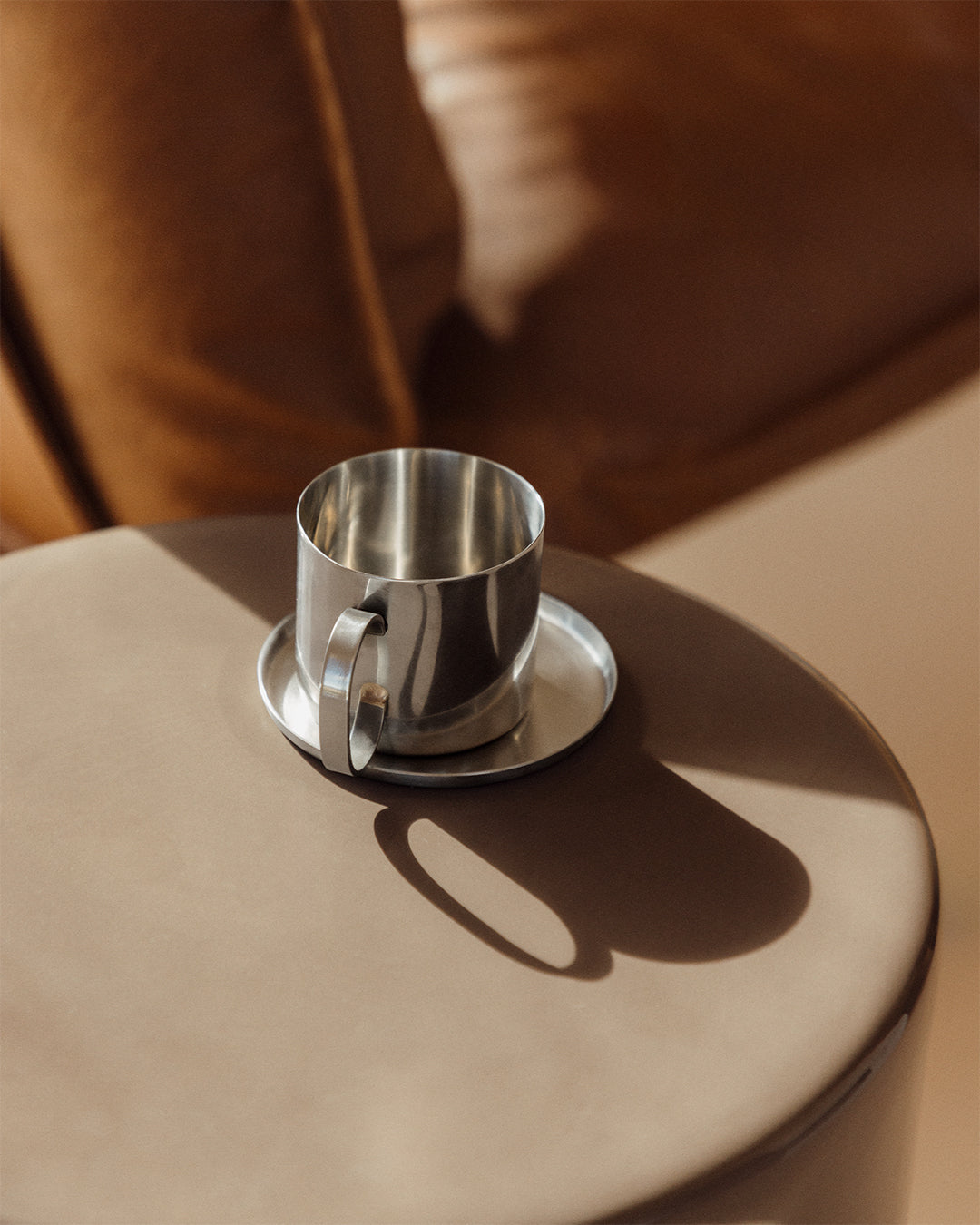
4. Think about light seriously. Japandi spaces use light as a material. Warm-toned bulbs, paper pendants that diffuse rather than project, candles on simple ceramic holders. Natural light should enter unobstructed where possible – sheer linen panels rather than heavy drapes. The way a room feels at 7pm in winter is worth thinking about from the start.
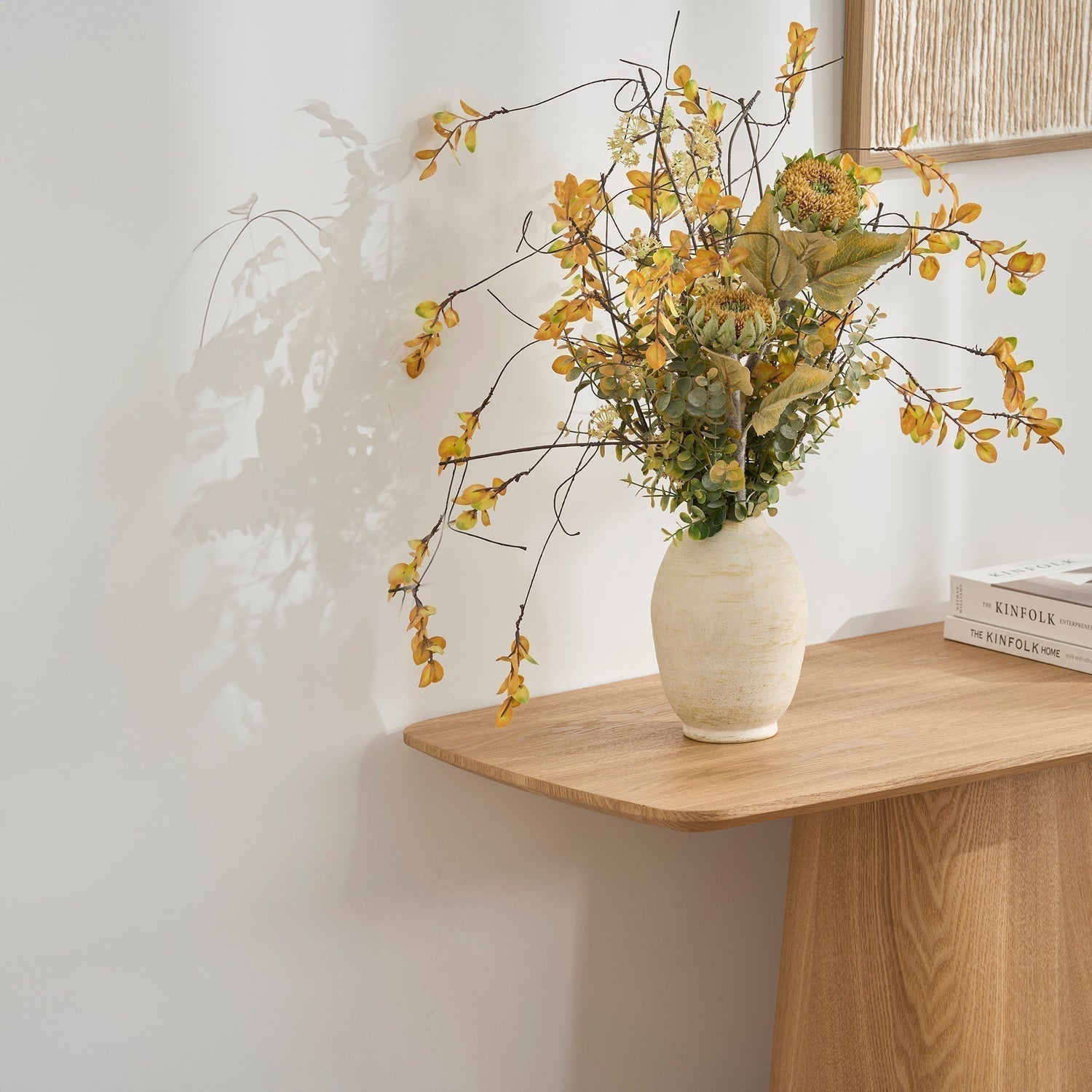
5. Bring in something living. Plants in Japandi aren't decoration, they're presence. A large-leafed plant in a raw clay pot, a single branch of eucalyptus in a simple vase, or even a small moss arrangement can ground a room in a way manufactured objects can't. The asymmetry of something living is very wabi-sabi, and it works.

6. Slow down the shopping. One Japandi principle that doesn't get talked about enough – things should be acquired slowly. The room should grow rather than be completed. Living with a half-furnished space for a while often tells you more about what it needs than any mood board ever will.
CLOSING THOUGHTS: Make It Your Own
What is genuinely compelling about Japandi, beyond the look itself, is what it asks of you as someone making a home. It asks you to slow down, to be honest about what you need, to choose things with some intention rather than just filling space. That's harder than it sounds in a world built around buying more.
The style is flexible enough to absorb your own personality if you let it. Maybe you're drawn more to the Japanese wabi-sabi side, and your space ends up a little more minimal, a little sparer. Or perhaps the Scandinavian warmth pulls harder, and your version has softer shapes, more layered textiles. Both are valid. Both are Japandi.
The rooms that do their best aren't the ones that follow a formula perfectly – they're the ones where you can feel someone made real decisions. Where a dining chair was chosen because of how the fabric caught the light, or a table was picked because the grain had exactly the right character. That's the thing about Japandi: it gives you permission to slow down and care about the small things. And in the end, home is made of small things.Visit the OFCASA to create a home that reflects your Japanese style.

Leave a comment
This site is protected by hCaptcha and the hCaptcha Privacy Policy and Terms of Service apply.