


![Jarvis Dining Chairs [Set of 2] [Faux Leather]](http://ofcasafurniture.com/cdn/shop/files/20260729154846.jpg?v=1785311411&width=104)
![Aoife Sleek Dining Chairs [Set of 2] [Linen Texture Fabric]](http://ofcasafurniture.com/cdn/shop/files/UDC8025_2.jpg?v=1777366607&width=104)
![Zahra Dining Chairs [Set of 2] [Boucle Fabric][⌀ 1.9 cm]](http://ofcasafurniture.com/cdn/shop/files/51_c6c2d8af-ba92-4c46-a677-4fe5804efb23.jpg?v=1789623459&width=104)
Autumn & Winter Dining: Creating a Warm, Elegant
Space for the Colder Months
Something shifts in September. The evenings come earlier, the air has that sharpness in it, and somehow the dining room, which might have felt a little formal or underused through summer, starts calling people back. Dinners last longer. Guests stay for another glass. The candles get lit before anyone asks. There’s something about the colder months that makes people want to gather around a table properly, and the dining space either rises to that moment, or it doesn’t.
It doesn’t take much to make it rise. A few deliberate choices, the right table, seating that’s genuinely comfortable, some texture, warm light, can completely change how a room feels between September and March. Not a renovation. Not a total restyle. Just a shift in what you choose and where you put it.
This is about autumn and winter dining room ideas that work in real homes, not magazine shoots. The kind of seasonal dining room styling that makes you want to pull your chair a little closer and stay.

THE SEASON’S EFFECT
Why Autumn and Winter Suit Warmer Dining Interiors
There’s a reason Scandinavian interior, with their emphasis on warmth, texture and candlelight, have become so widely admired. They were designed around exactly this problem: how do you make a room feel genuinely comfortable when it’s cold and dark outside? The answer is never just about heating. It’s about what you see, what you touch, and how the light falls.
In the dining room, this translates quite directly. Hard, reflective surfaces, polished concrete floors, lacquered furniture, cool-toned upholstery, can feel perfectly comfortable in July and slightly bleak by November. Softer materials, warmer tones and upholstered seating shift the balance. Not dramatically, but perceptibly. You walk into a room, and it feels like somewhere you’d want to spend an evening rather than somewhere you’d eat quickly and leave.
The good news is that building a cosy dining room for the colder months doesn’t mean starting from scratch. It usually means making two or three changes considered, often to the most-used pieces in the room, the table and chairs, and adding texture through simpler means like textiles and lighting.
THE FOUNDATION
Starting with the Dining Table
The table sets the mood before anyone sits down. Its scale, its tone, its surface, all these shapes how the rest of the room reads. For autumn and winter dining, there are broadly two directions that work well: darker, more dramatic tables that become the centerpieces of space, and softer, more understated ones that recede a little and let texture elsewhere do the work.
|
Laila, rectangular · dark grey marble A dark grey marble surface does something particular in low light, the tones shift and the surface develops a depth that’s completely different from how it reads in daylight. Paired with upholstered chairs in oat, cream or taupe, it reads as both grounded and warm. |
Thalia, rectangular · black wood A black wood table is a more dramatic choice, and in the right room it can be stunning. It asks for chairs with some softness for them, otherwise the whole scheme can tip toward cold rather than cosy. |
|
Round tables naturally bring people together. A compact round table in a soft grey tone makes an excellent anchor for a cosy dining corner, especially in smaller spaces or open-plan layouts where the dining area should feel distinct but not imposing. |
A more understated choice that lets the chairs carry visual interest. For a dining scheme built around layering textures, a quieter table is often exactly what’s needed. It holds everything together without competing. |
One thing worth noting: in a darker room or under warm artificial light, mid-toned surfaces, pale oak, light beige, can sometimes look a little washed out. Darker tables and those with natural surface variation tend to come alive in evening light in a way that paler, more uniform surfaces don’t. It’s a minor consideration, but it’s one of those details that makes a room look more deliberate.
“The best autumn dining rooms feel like they were always designed for evenings, the kind of spaces that look even better by candlelight than they do in daylight.”

SEATING THAT WORKS
Choosing Dining Chairs for Comfort as Well as Style
This is where so many dining rooms quietly fall short. Beautiful chairs that nobody particularly wants to sit on for more than forty minutes. Lovely to look at, slightly punishing to occupy. For autumn and winter especially, when dinners run long and guests aren’t rushing anywhere, seating comfort matters a great deal more than it might be in a space used mainly for quick weeknight meals.
Upholstered dining chairs have become more popular partly because people have simply noticed how different a fabric seat feels from a hard one after an hour at the table. But beyond the basic cushioning question, there are some specific materials and constructions that suit the season particularly well.
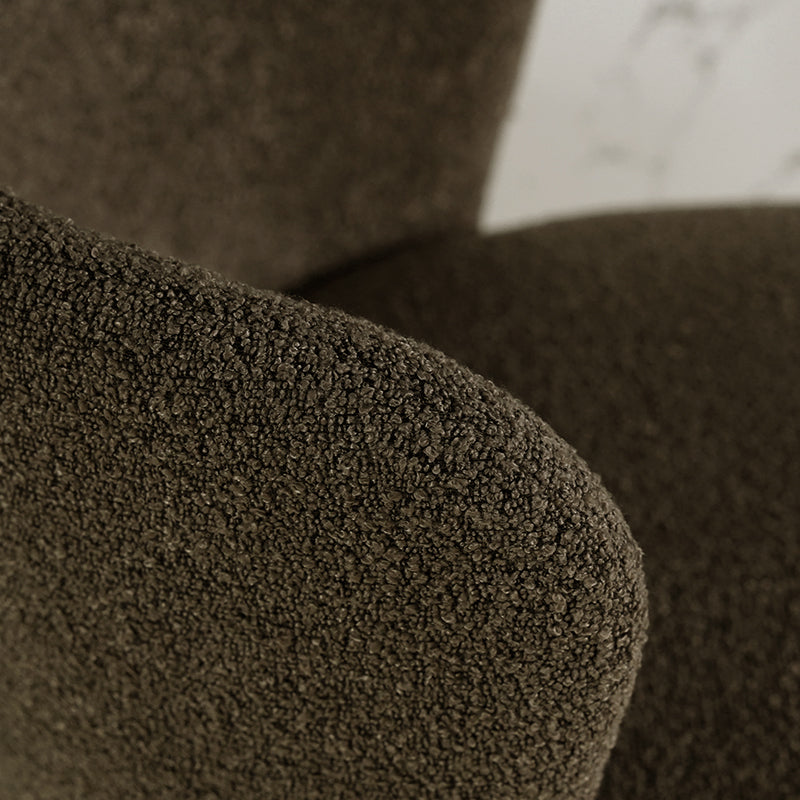
Bouclé is one of them. It has a slightly looped, textured surface that reads as warm and tactile even before you sit down, the kind of fabric that makes a chair look inviting from across the room. The Zahra dining chairs in bouclé are a good example of this approach: the texture does a lot of the atmospheric work without the color needing to do anything complicated. They suit both the Laila marble table and the Elowen round table quite naturally.
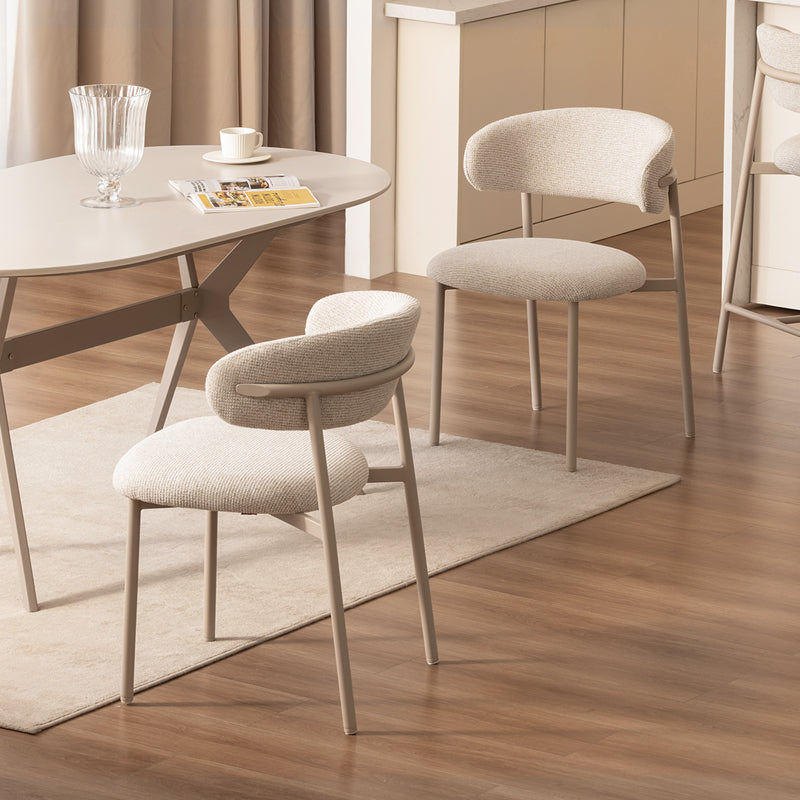
Linen-effect fabrics occupy a slightly different register. Softer and more matte, they bring a relaxed, almost lived-in quality that suits autumn home décor well, less obviously seasonal than deep velvet or heavy chenille, but warmer in feeling than leather or smooth performance fabrics. The Valda dining chairs in their linen-effect upholstery land in this territory, chairs that could sit happily at the same table year-round but feel especially right when the evenings get darker. Their wide, supportive backrest is worth noting, too. Proper back support matters if you’re planning meals that stretch past dessert.
The Karin dining chair takes a slightly cleaner, more minimal approach, a sculptural silhouette that works well in contemporary interiors where the table is already doing something visually interesting, like the Thalia in black wood. It doesn’t need to shout. And the Harper dining chairs, with their upholstered seat pads and structured shape, offer a practical middle ground, comfortable without being overly generous in footprint, which matters if you’re sitting six around a 160cm table.
For tables where you want a little more presence at the head, a sense that someone is properly seated and settled, rather than perched, armchairs in the dining setting work surprisingly well. The Eloise dining chairs with arms, in their chenille upholstery, do this gracefully: generous and soft feeling, the kind of seat that signals to whoever sits in it that they’re meant to be comfortable. They suit a longer table well and add a sense of occasion without tipping into formality.
And while dining chairs tend to get most of the attention, bar stools at a kitchen island deserve a mention in the autumn and winter context too. If the island is where casual meals and long weekend mornings happen, the Zahra bar stools in linen-effect fabric bring that same soft, seasonal warmth to counter height. The oat colorways with walnut-patterned legs sit particularly well against natural wood or stone kitchen surfaces in the colder months.
THE ART OF LAYERING
Mix Textures Instead of Matching Everything
A fully matched dining set, table and six identical chairs, all from the same collection, all the same tone, can look considered and clean. But in autumn and winter particularly, it can also feel a little thin. A room where every surface is the same material doesn’t have much for the eye to settle on, and settling is exactly what you want people to do in the colder months.
Mixing is more interesting. A dark marble table paired with bouclé chairs introduces stone next to fabric, hard next to soft, grey-black next to cream and the contrast is what makes both materials look better. Similarly, a warm wood table with linen-upholstered chairs creates a room that reads as layered and considered rather than matched. The textures complement each other rather than competing.
This also applies to what’s on the table and around it. A linen tablecloth or runner softens a stone or wood surface significantly and adds another tactile element. Ceramic dinnerware, especially in earthy, matte glazes, adds weight and warmth. Aged brass candlesticks next to smooth white ceramics create the same kind of productive contrast as a marble table with fabric chairs.
The one thing that tends to go wrong with texture mixing is either doing too much or doing it without a tonal anchor. Keep the color palette consistent, warm neutrals, earthy tones and almost any combination of textures will hold together.

THE PALETTE
Autumn and Winter Color Without Overdoing It
There’s a version of seasonal dining room styling that involves pumpkins, obviously orange cushions and a wreath above the fireplace. That’s one approach. This is a different one.
The colors that work best in autumn and winter dining rooms are the ones that read as warm without being self-consciously seasonal. Oatmeal, cream, beige and taupe are the backbone, endlessly versatile, and they shift quality in evening light in a way that cooler tones don’t. Add to those a soft charcoal or deep grey, a muted green or sage, and perhaps a single richer tone — warm brown, terracotta, a dusty rose — and you have a palette that feels completely right for the colder months without needing to be swapped out for January.
Oatmeal · Sand · Taupe · Warm Brown · Charcoal · Muted Sage · Terracotta · Deep Grey
In practice, this means thinking about which of these tones your chairs and table are already sitting in, and then building the softer styling elements, napkins, ceramics, candles, a vase, within the same family. The result ends up feeling seasonally appropriate without being obviously themed, which is usually a more useful and longer-lasting outcome.
THE DETAILS
Making the Table Feel Lived-In
An autumn or winter dining table that feels genuinely inviting has something the perfectly set showroom table doesn’t: a sense that someone has thought about this evening specifically. It’s a fine line between styled and contrived, and it usually comes down to keeping things simple and allowing a little imperfection.
A few things that consistently work linen napkins loosely folded rather than precisely arranged. Candles in varying heights, some tall, some squat, clustered loosely down the center rather than spaced evenly. Ceramic or stoneware that doesn’t all matches. A low vase or bowl with seasonal branches, dried flowers or something foraged rather than florist fresh. A small amount of something natural that doesn’t look too deliberately placed.
What the table doesn’t need in autumn, and winter is a lot of color. The warmth comes from the textures, the materials and the light. Let those do the work.
THE ATMOSPHERE
Lighting That Actually Changes the Room
Lighting is probably the most underused tool in domestic interior design, and in dining rooms it makes an especially significant difference. A room lit from a single overhead source, even a beautiful pendant, doesn’t have the layered warmth that the colder months call for.
The fix is usually simple. A dimmer switch on the main pendant, so you can drop the light level during meals. A few secondary sources at lower height, sideboard lamps, smaller candlestick holders on a console, that add warmth without adding brightness. And candles, always candles. Not as a styling gesture but as a genuine light source. Even two or three candles on a dining table change the quality of the light in a way that’s difficult to replicate with artificial fixtures.
Warm-toned bulbs, somewhere around 2700K, are the baseline for evening dining in autumn and winter. Anything cooler reads as office light rather than home light, which defeats everything else you’ve done to make the room feel warm. It’s one of those details that costs almost nothing to get right and makes a noticeable difference every single evening.
THE WHOLE PICTURE
A Dining Space People Want to Stay In
None of this is complicated. The autumn and winter dining room ideas that work are rarely dramatic, they’re the result of a few choices made with some care. A table that has real presence in evening light. Chairs that are genuinely comfortable to sit in for a long time. A surface texture or two that gives the room something interesting to look at and to touch. Warm light at a human level. A table that looks like someone has thought about this evening.
The dining table is one of the most human pieces of furniture in a home. It’s where people gather, eat together, talk longer than they planned, celebrate things, argue about things, linger. During the colder months, it becomes even more central, because there’s less reason to be outside, and more reason to be exactly here.
Getting the room right doesn’t mean spending a great deal or overhauling everything. A different table, or a different set of chairs, or simply swapping out the lighting, sometimes a single change is enough to shift the whole feeling of space. The goal is a dining room that you’re glad to have when October arrives, and that still feels completely right in February. Comfortable, elegant, and entirely your own.

Leave a comment
This site is protected by hCaptcha and the hCaptcha Privacy Policy and Terms of Service apply.